
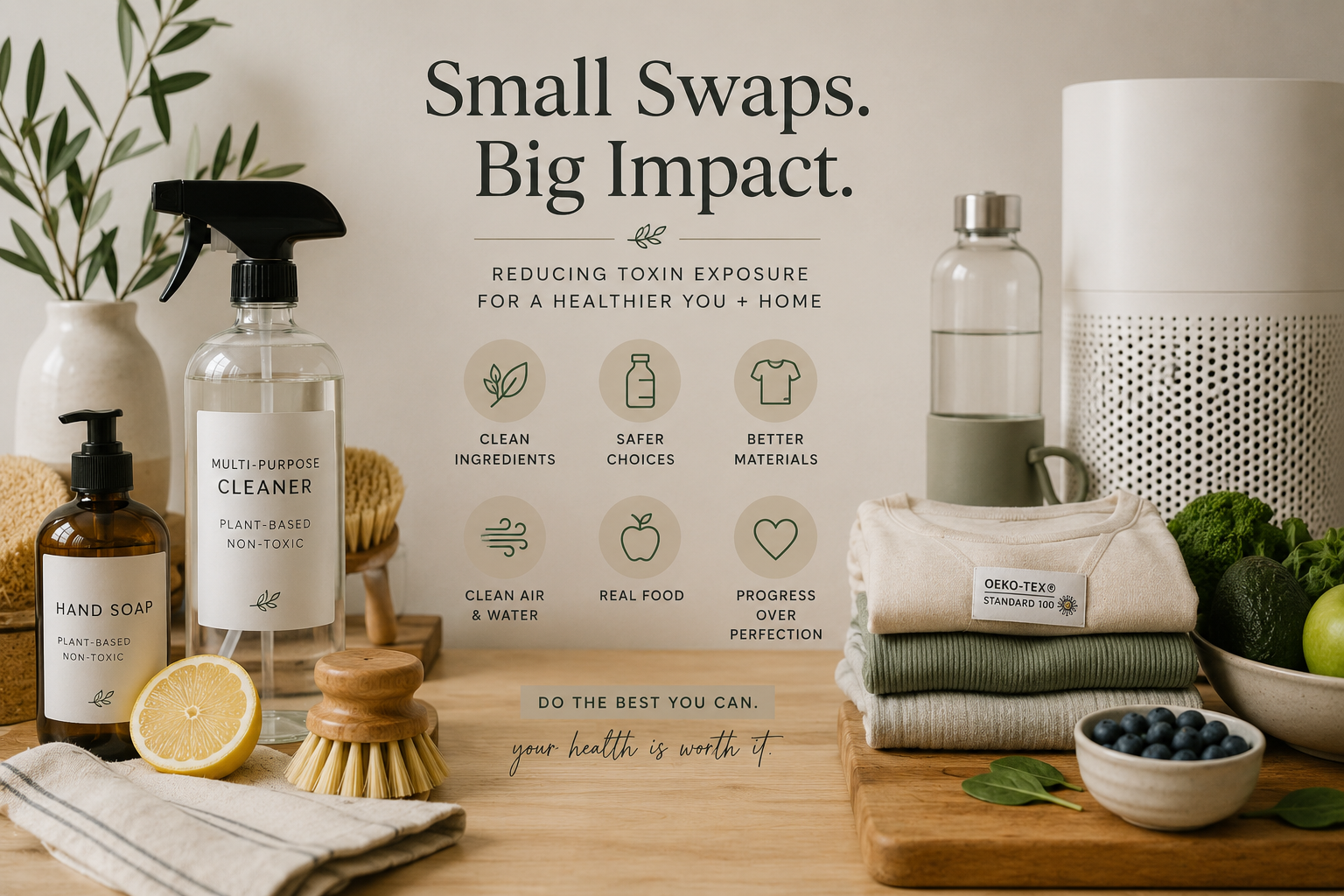
There are toxins everywhere in our environment, and most people don't even realize how many they come into contact with every single day. They're in the air we breathe, the products we clean with, the clothes we wear, the food we eat, and even many of the personal care products we use. They have become so integrated into modern life that we often don't think twice about them.
The truth is, it is virtually impossible to eliminate toxins completely. Modern manufacturing, conventional farming practices, and the products we use every day make that nearly impossible. But that doesn't mean we shouldn't try to reduce our exposure where we can.
That's what this is about—not perfection, but making better choices one step at a time.
When you really start looking into it, it can feel like no one is truly looking out for us when it comes to environmental toxins. Many products are designed to look, smell, and perform well, but very few people stop to ask what ingredients or chemicals are being used to make that happen.
Most people don't realize that the all-purpose cleaner they're spraying on their kitchen counters may contain ingredients that have been linked to hormone disruption or respiratory irritation. They don't realize that the hand soap they use several times a day may contain unnecessary chemicals that come into contact with their skin dozens of times every day.
The same goes for clothing.
Many people don't realize that most athletic clothing is made from polyester, which is a synthetic plastic fiber. Manufacturing these fabrics often involves numerous chemical treatments, and while the finished clothing is considered safe for everyday use, some people prefer to reduce unnecessary exposure by choosing products made with safer manufacturing standards whenever possible.
Then there are air fresheners.
To me, these are one of the easiest products to avoid.
Have you ever stopped to think about how a company creates a scent called "Summer Golden Hour" or "Refresh & Energize"? Those aren't fragrances that exist in nature. They're carefully engineered blends of synthetic fragrance chemicals designed to create a certain feeling or experience.
While they may smell pleasant, many artificial fragrances can trigger headaches, brain fog, or irritation in sensitive individuals. I never noticed this myself until I started removing heavily fragranced products from my home. Then, whenever I was around them again, the difference became obvious. I would often end up with a headache or simply feel off.
That doesn't mean everyone will have the same experience, but it made me realize that these products weren't something I wanted to continue bringing into my home.
No matter how bad your shoes smell or how messy your kids' room gets, there are plenty of safer alternatives that can freshen your home without filling the air with unnecessary synthetic fragrances.
The good news is that while we can't control everything in our environment, we can control what we bring into our homes.
You don't have to eliminate everything. In fact, I wouldn't recommend trying. That's overwhelming and unrealistic. Instead, focus on reducing your exposure over time. Every small swap makes a difference.
Start with Your Home
One of the easiest places to begin is with your cleaning products.
Apps like Yuka have been incredibly helpful for me. You can scan products and receive an overall rating along with an explanation of why certain ingredients received that score. Is it perfect? No. But it makes choosing better products much easier.
The same app can also be used for cosmetics and personal care products.
Don't assume that healthier products have to be expensive, either. Many affordable brands are making products with cleaner ingredients. Even if a healthier option costs a little more, I encourage you to refer back to my last blog, Now or Later. Sometimes spending a little more now can save you from paying a much bigger price with your health later. Spend a little time researching companies and reading about their values. See what they're doing to make safer products instead of simply believing the marketing on the front of the bottle.
With AI and the amount of information available today, it's easier than ever to compare products and find safer alternatives that fit your budget.
Food Matters Too
Another major source of exposure comes from the food we eat.
Conventional farming often relies on pesticides and herbicides, and while washing produce is always a good idea, it can't remove chemicals that have already been absorbed into the plant.
Buying organic whenever your budget allows can help reduce your exposure. If buying everything organic feels overwhelming, focus on the Dirty Dozen and Clean Fifteen lists. These resources help prioritize which fruits and vegetables are most important to buy organic and which tend to have lower pesticide residues.
You can also look for the Non-GMO Project Verified label. While it isn't the same as organic, it's another positive step in the right direction.
Again, this isn't about perfection. It's about making improvements where you can.
Choosing Better Clothing
Clothing is another area that often gets overlooked.
As I mentioned earlier, most workout clothing is made from polyester. Polyester performs well because it's lightweight, moisture-wicking, and dries quickly—but it is still a synthetic plastic fiber.
I'll be honest—I still wear polyester workout clothes. I sweat a lot during training, and cotton simply doesn't perform the same way for me.
The challenge is that many non-toxic or natural workout brands are expensive. Spending $100 on a pair of shorts just isn't realistic for everyone.
So what can you do?
Instead of avoiding polyester altogether, look for brands that use safer manufacturing practices and certifications.
Some of the best certifications include:
OEKO-TEX® STANDARD 100
Tests finished textiles for hundreds of potentially harmful substances.
Screens for chemicals such as formaldehyde, certain heavy metals, some pesticides, certain phthalates, and harmful dyes.
One of the easiest certifications to find on athletic clothing.
bluesign® APPROVED
Focuses on safer manufacturing processes.
Restricts many hazardous chemicals before they ever reach the finished fabric.
Common among premium outdoor brands.
Other Great Certifications
Global Recycled Standard (GRS)
MADE SAFE
Cradle to Cradle Certified
Don't get too caught up in memorizing every certification. Simply spend a few minutes researching the company. See what they stand for, what certifications they use, and how they manufacture their products. It doesn't take long, and it can help you make more informed decisions.
Another great option is choosing natural fibers whenever possible, including cotton, hemp, linen, bamboo, and merino wool.
Merino wool is one of my favorites. It's naturally odor-resistant, moisture-wicking, temperature regulating, and incredibly durable. It's definitely more expensive, but it's an outstanding material.
Upgrade Your Kitchen
Your kitchen is another place where small changes can have a big impact.
Whenever possible, replace plastic food containers with glass. Swap plastic utensils for stainless steel. Consider cooking with stainless steel or cast iron instead of heavily scratched non-stick cookware.
These changes can help reduce unnecessary contact with certain chemicals that may migrate from plastics or damaged non-stick surfaces into food.
Don't Forget Your Air and Water
Your air and drinking water deserve attention too.
A high-quality air purifier can help reduce airborne particles and improve indoor air quality.
For drinking water, consider investing in a quality reverse osmosis system or a stainless steel gravity-fed carbon filter instead of relying solely on a basic plastic pitcher filter. While pitcher filters can improve taste and reduce chlorine, more advanced filtration systems generally remove a much wider range of contaminants.
Progress Over Perfection
At the end of the day, do the best you can.
Don't overwhelm yourself trying to replace everything overnight. That's not sustainable, and it isn't necessary.
Instead, start asking yourself one simple question before buying a product:
"Is this supporting my health, or is there a better option?"
That one question can completely change the way you shop over time.
As you continue learning, you'll naturally begin noticing more opportunities to make healthier swaps. It becomes less overwhelming and more of a lifestyle.
We can't control everything in the world around us. We can't control the air outside, modern manufacturing, or every chemical we're exposed to.
But we can control what comes into our homes, what we put on our bodies, and the choices we make each day.
Those small decisions add up over time.
So take it one swap at a time. Your home—and your health—will thank you for it.